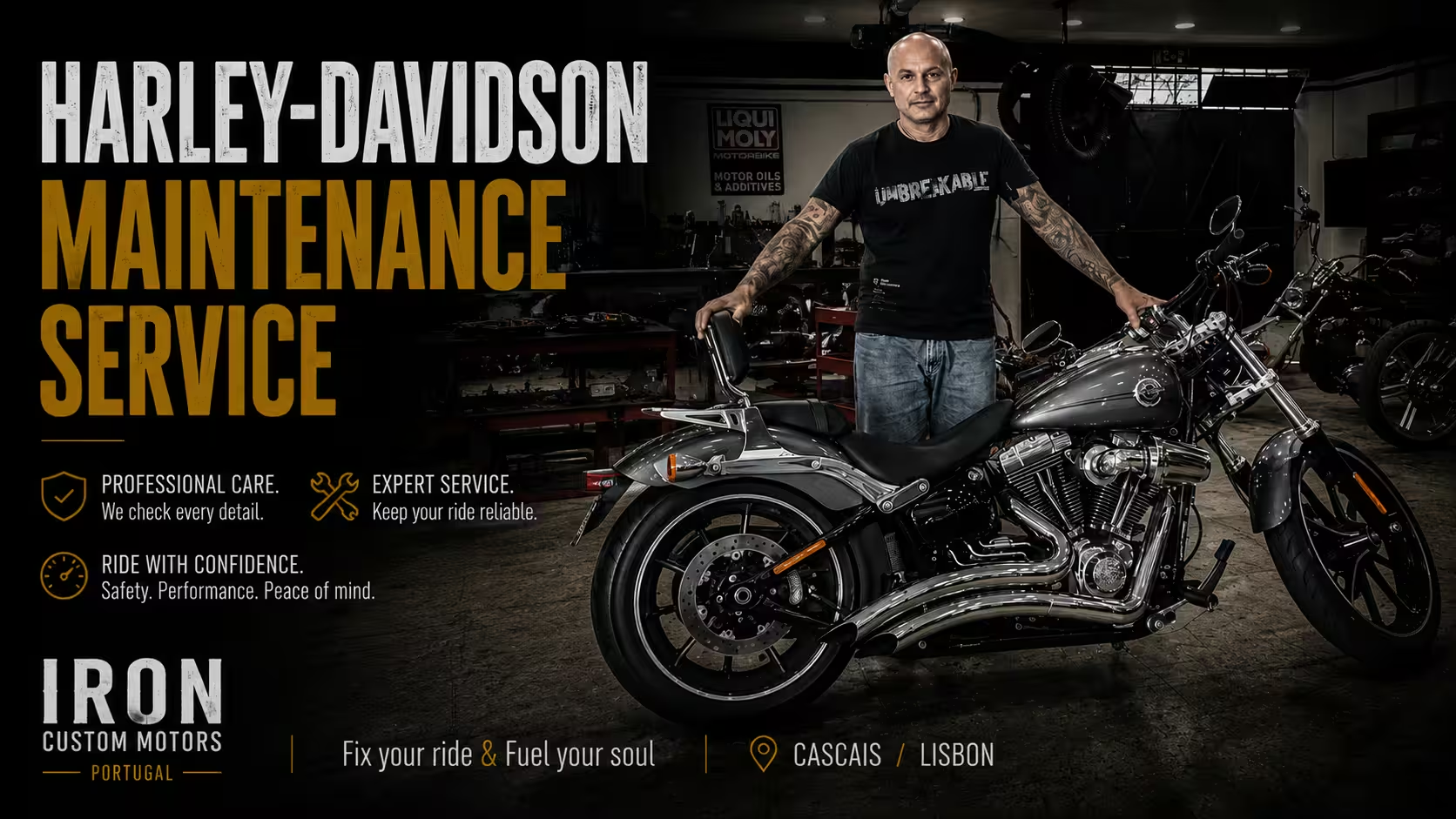
Iron Custom Motors is an independent motorcycle workshop in São Domingos de Rana, between Cascais and Lisbon, and a full Harley-Davidson service here means the complete job: engine, primary and transmission oils each changed with their own correct fluid, a new oil filter, a full brake-fluid flush and bleed, and the high-flow air filter cleaned, dried and re-oiled properly. That is what a real service covers. An oil top-up is not a service.
A Harley rewards being understood. These are long-legged V-twins built to cover distance, and they age gracefully only when the maintenance behind them is honest. Below is why the workshop and the materials matter — and exactly how we do it.
Why the right workshop and the right materials matter
A Harley is not a generic machine, and it should not be serviced as one. The fluids are specific, the intervals are specific, and several jobs need the correct tool to be done at all — not improvised. Using a single all-purpose oil across systems that were engineered for different lubricants, or topping fluids instead of replacing them, is how small compromises quietly become expensive faults.
The right workshop brings three things: the correct materials for the model in front of it, the proper tools for each procedure, and transparency about what was done and why. At ICM you get told what your bike needed, what was replaced, and what to watch before the next visit. Nothing hidden, nothing padded. That is the difference between a service you trust and a receipt you hope was honest. See our full Harley service and general motorcycle service.
Three oils, three jobs: engine, primary and transmission
Here is what surprises many riders: a Harley Big Twin runs three separate lubrication systems, and each one takes its own oil on its own schedule. The engine, the primary chaincase and the transmission are independent worlds. That is unusual — most machines share far more — and it is precisely why one oil for everything is wrong. Each fluid is formulated for a different job: the engine oil handles combustion heat, the primary lubricates the clutch and primary drive, the transmission oil protects the gears.
As a reference, Harley's schedule points to engine oil and filter roughly every 8,000 km or 12 months, the primary chaincase around every 16,000 km, and the transmission around every 32,000 km, with a first service at about 1,600 km on a new bike. We use kilometres and we follow the manufacturer schedule — then adjust to how the bike is actually ridden. A Harley that lives in Lisbon traffic and short summer hops is not the same as one touring the Algarve; real use decides the finer timing, the schedule sets the floor.
The oil filter
Every engine oil change gets a new oil filter. There is no sensible version of this job that reuses the old one. The filter is the last line of defence between circulating oil and the bearings, cam and valvetrain — it traps the fine metal and carbon that oil carries away. A used filter is already partly loaded and can bypass unfiltered oil once it clogs. Fresh oil through an old filter is a half-measure; we do not do half-measures. New oil, new filter, every time.
Brake fluid: why it must be flushed, not just topped up
Brake fluid is the one people forget, and it is the one that is safety-critical. DOT4 is hygroscopic — it absorbs moisture straight out of the air, even through the system. As water content rises, the fluid's boiling point falls, and under hard or repeated braking that trapped moisture can vaporise. The result is a soft, fading lever exactly when you need the brakes most.
That is why brake fluid is flushed, not topped up. Adding fresh fluid to a reservoir of old, wet fluid does nothing for what is sitting in the calipers. Harley's guidance is to replace it roughly every two years, or once moisture reaches around 3%. We do a full flush and bleed with a proper vacuum/pressure bleeder, pushing clean fluid all the way through until every trace of old fluid and air is gone and the lever comes back firm. This is not a DIY step to improvise — get it wrong and air stays in the line. It is done properly, on the right tool, or not at all.
The high-flow reusable air filter — washed, dried and re-oiled correctly
Many Harleys here run a high-flow reusable air filter (the K&N type), and this is where good workshops separate from the rest. This filter is not disposable — you do not tap it clean and refit it. It is cleaned with a dedicated filter cleaning solution, then reverse-flushed with cool, low-pressure water from the clean side to the dirty side to carry the dirt out the way it came in.
Then it must air-dry fully — no heat, no compressed air, both of which damage the media. Only when it is completely dry is it re-oiled, with the correct amount of filter oil in light, even coats. This last part is where most problems are born: over-oiling is the number-one cause of trouble. Excess oil gets drawn into the intake and fouls the airflow (MAF) and O2 sensors, which triggers a check-engine light and poor running that owners then chase for weeks. Correct wash, full dry, correct oil quantity — that unglamorous discipline is exactly what a proper service is.
Watch a full Harley service (ASMR)
We filmed the whole thing — no music, no talking over it, just the real process, start to finish. The Harley arriving on the lift, the three oils drained and refilled, the new oil filter going on, the brake fluid flushed and bled, and the air filter washed, dried and re-oiled. If you want to see what "done right" actually looks and sounds like, this is it.
Why riders bring their Harley to Iron Custom Motors
Riders come to us because we are an independent Harley specialist in Cascais and Greater Lisbon who treats the bike the way the manufacturer intended: the correct fluids for each system, the proper tools for each job, and a transparent account of everything done. We work in English, Portuguese, Russian and Ukrainian, so nothing gets lost between rider and workshop. No invented promises — just careful, methodical work and a bike that leaves running the way it should. Explore parts and upgrades and tuning, or get in touch. See all our Harley service, tuning and custom work in the Harley Hub.
FAQ
How often should a Harley's engine oil be changed?
As a reference, Harley's schedule points to engine oil and filter roughly every 8,000 km or 12 months. We follow the manufacturer schedule and adjust to how the bike is actually used.
Why does a Harley need three different oils?
A Harley Big Twin has three separate lubrication systems — engine, primary chaincase and transmission — each with its own oil and its own interval. Each fluid is formulated for a different job, so one oil for all three is incorrect.
Do you replace the oil filter every time?
Yes. A new oil filter goes in with every engine oil change. Fresh oil through a clogged old filter defeats the purpose of the service.
How often should Harley brake fluid be changed?
Harley's guidance is roughly every two years, or once moisture content reaches around 3%. DOT4 absorbs moisture over time, which lowers its boiling point, so it is flushed and bled — not topped up.
Can a high-flow air filter just be tapped clean?
No. A reusable high-flow filter must be cleaned with the correct solution, reverse-flushed with cool low-pressure water, air-dried fully, and re-oiled with the correct amount of oil. Over-oiling can foul the sensors and cause running faults.
Do you service Harleys in Cascais and Lisbon?
Yes. Iron Custom Motors is in São Domingos de Rana, between Cascais and Lisbon, and serves Harley owners across Greater Lisbon.
Book your Harley service. WhatsApp +351 917 961 230, Tuesday–Saturday 10:00–18:00, São Domingos de Rana, Cascais.