Brake service is a system
Brake pads are simple parts from the outside: a friction material bonded to a metal backing plate. But on the motorcycle, they are part of a much bigger system - calipers, discs, brake fluid, brake lines, ABS, tyres, suspension and rider input all work together every time you slow down.
That is why replacing brake pads is not just “putting new pads in.” A proper brake service is inspection, diagnosis, correct parts selection, careful installation, bedding-in and a final safety check.
At Iron Custom Motors, we treat brakes as a system, not as an isolated part.
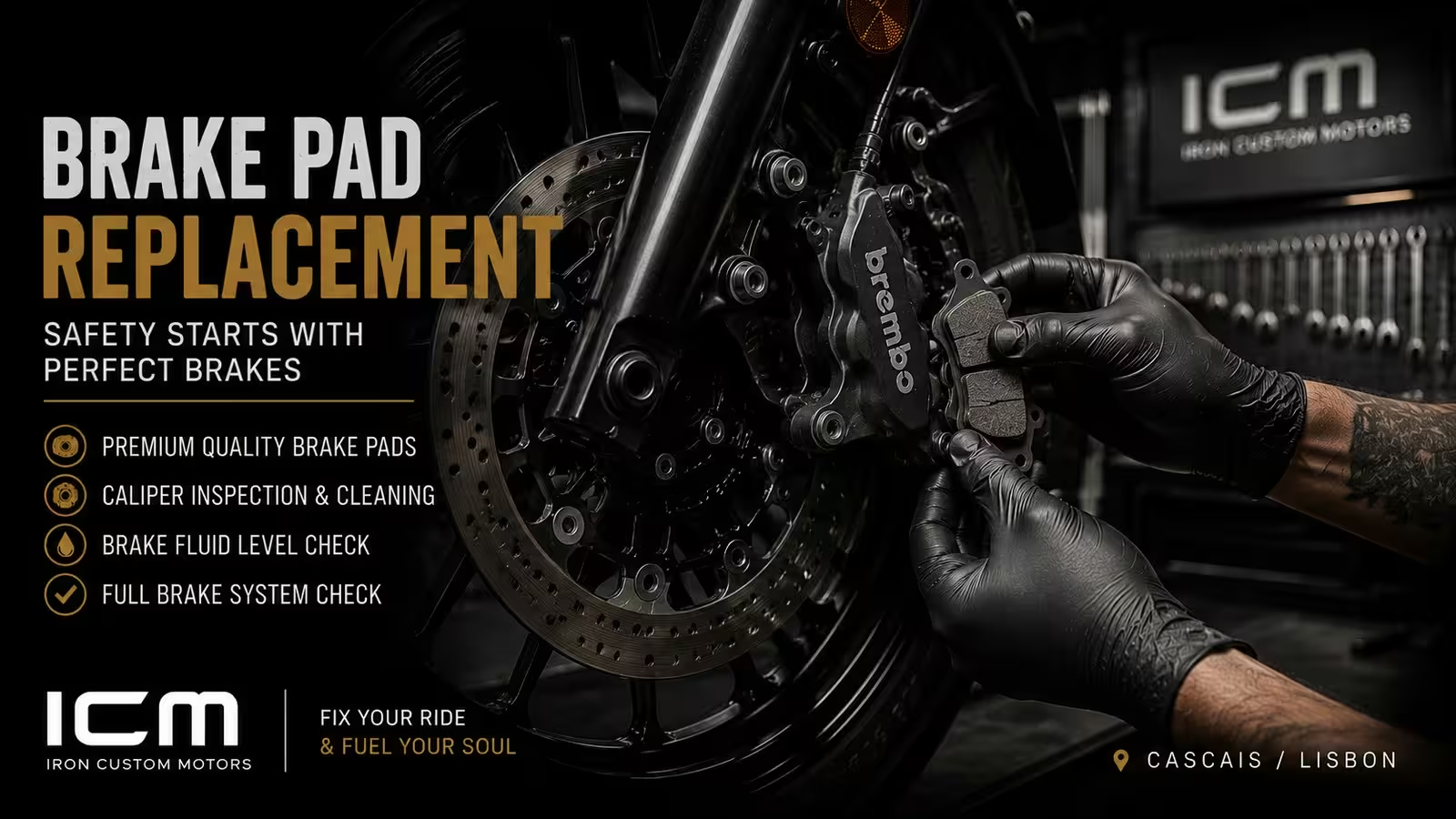
Watch the brake pad replacement
A short workshop look at motorcycle brake pad replacement: pad condition, caliper inspection, disc health and the final brake-system check.
Open on YouTubeWhy Brake Pad Condition Matters
Brake pads convert motion into heat through friction. Every time you brake, the pad presses against the disc and the motorcycle’s speed is reduced. That process looks simple, but the loads are high - especially on the front brake, during downhill riding, with a passenger, on a loaded touring bike, or on a heavy Harley-Davidson or custom motorcycle.
As brake pads wear, braking feel becomes less precise, stopping distance can increase, heat management becomes worse, the disc can wear unevenly, and the brake lever or pedal may travel further than before.
The problem is not only pad thickness. A pad can still have material left, but be glazed, contaminated, cracked, overheated, unevenly worn or poorly matched to the disc. In those cases, the brake may still “work,” but not as cleanly or predictably as it should.
On a motorcycle, predictability matters. A brake that bites too suddenly, fades when hot, vibrates through the lever or feels wooden can change how the rider approaches corners, traffic and emergency stops.
Brake Pads Are Only One Part of the System
A common mistake is to assume that weak braking always means worn pads. Sometimes it does. But sometimes the real cause is somewhere else.
A proper inspection should look at pad thickness and wear pattern, disc condition and surface, caliper movement, piston condition, brake fluid age and contamination, brake hose condition, lever or pedal feel, ABS warning lights, tyre condition and suspension behavior under braking.
A motorcycle with fresh brake pads but old brake fluid can still have a soft, spongy lever. A motorcycle with new pads and a damaged disc may vibrate or make noise. A bike with sticky caliper pistons can wear one pad faster than the other. A bike with poor tyres can have strong brakes but poor stopping performance because the tyre cannot transfer the force to the road properly.
This is why brake work should never be treated as a quick cosmetic repair. It is part of the motorcycle’s safety architecture.
Choosing the Correct Brake Pads
Brake pads are not all the same. Different compounds are designed for different motorcycles, riding styles, disc materials and temperature ranges.
Some pads are built for everyday road use, with stable performance from cold and smooth control in traffic. Others are designed for heavier bikes, sport riding or higher temperatures. Some compounds may offer stronger bite but create more disc wear, more dust or a different feel at the lever.
The correct choice depends on the motorcycle, the rider and the brake system: scooter or maxi-scooter, naked bike used daily in Lisbon traffic, touring motorcycle with luggage and passenger, Harley-Davidson or heavy cruiser, adventure bike used on mixed roads, sport motorcycle with aggressive braking, or a custom bike with modified wheels, calipers or discs.
There is no universal “best brake pad.” The best pad is the one that matches the motorcycle, the brake disc, the riding conditions and the manufacturer’s specification.
For custom motorcycles, this becomes even more important. A bike may have aftermarket calipers, custom wheels, non-standard discs, a changed master cylinder or different brake lines. In that case, pad selection should be based on the actual components installed - not only on the model name.
Bedding-In: Why New Pads Need Time
New brake pads do not deliver their best performance immediately. They need to mate correctly with the brake disc. This process is usually called bedding-in.
During bedding-in, the contact surfaces adapt to each other and a proper friction layer develops on the disc. If this process is rushed, ignored or done incorrectly, the rider may experience noise, vibration, uneven braking feel or reduced performance.
This is one of the reasons why we do not like the phrase “just changed the pads, now everything is perfect.” New pads need correct installation, a suitable disc surface and a controlled bedding-in period. The brake should feel predictable, but the rider should still avoid aggressive braking until the pads and discs are properly settled, unless an emergency stop is necessary.
The exact bedding-in recommendation depends on the pad manufacturer and compound. A road pad, a sintered pad and a race compound may not require the same approach.
What Riders Often Miss
Uneven wear matters. One pad may look acceptable while the other is almost finished. This can happen because of caliper piston issues, guide pin problems, dirt, corrosion or a caliper that is not moving freely.
Brake fluid can make new pads feel bad. If the brake lever feels spongy after pad replacement, the pads may not be the problem. Old fluid, air in the system, rubber hose expansion or internal contamination can change lever feel.
Discs matter as much as pads. New pads installed on a heavily worn, grooved, warped or contaminated disc may never perform correctly. Surface condition, thickness and runout all matter, and exact limits must be checked according to the motorcycle manufacturer’s specification.
Coastal climate can affect brakes. Around Cascais and Lisbon, motorcycles live with humidity and sea air. That can accelerate corrosion on fasteners, pad pins, caliper hardware and exposed metal surfaces.
Heavy bikes are less forgiving. A touring motorcycle, cruiser or Harley-Davidson with passenger and luggage puts serious load into the braking system. Pads, discs, fluid and tyres work harder.
Common Mistakes Owners Make
The first mistake is waiting until the brake starts making metal-on-metal noise. At that point, the disc may already be damaged, and the repair can become more expensive.
The second mistake is replacing pads without inspecting the disc. If the disc surface is poor, new pads may wear badly, make noise or give weak braking feel.
The third mistake is contaminating the pads or discs during other service work. Brake pads and discs do not like oil, chain lube, fork oil, incorrectly used cleaner residue or general workshop dirt.
The fourth mistake is mixing parts without checking compatibility. Not every pad compound suits every disc or riding style.
The fifth mistake is assuming that rear brake weakness is not important. The rear brake helps with low-speed control, traffic riding, hill starts, two-up riding and stabilizing the motorcycle.
When to Visit a Workshop
Do not delay a brake inspection if you notice scraping, grinding or metallic noise, vibration through the lever or pedal, brake lever coming closer to the grip, weak bite, delayed response, burning smell after normal riding, uneven pad wear, visible cracks, missing material, glazing, brake fluid leak, ABS warning light, the bike pulling to one side under braking, or brake performance changing when hot.
These symptoms do not always mean the same fault. But with brakes, guessing is the wrong approach. The system needs to be inspected before the motorcycle is pushed harder.
What We Check at Iron Custom Motors
When we replace brake pads at Iron Custom Motors, the work does not stop at removing the old pads and fitting new ones.
We check the condition of the pads, discs, calipers, pistons, pad pins, hardware, brake fluid condition, lever or pedal feel, hose condition and visible signs of leaks or contamination. On motorcycles with ABS, we also pay attention to warning lights and system behavior.
For custom motorcycles, Harley-Davidson models, touring bikes and premium motorcycles, we also look at the bigger picture: weight, riding style, tyre condition, suspension behavior and whether the installed brake components match the motorcycle’s real use.
A proper brake service should leave the rider with more than new parts. It should leave them with a clear understanding of what was worn, what was checked and what may need attention later.
Pads, discs and calipers are estimated bike by bike, and the fluid is a fixed line on our service page: brake fluid change 100 € (non-ABS) / from 150 € (ABS), brake service.
Conclusion
Brake pads are wear parts, but braking is not a small subject. A motorcycle brake system is one of the most important safety systems on the bike, and pad replacement is the right moment to inspect the system properly.
Good brakes are not only about stopping power. They are about feel, control, predictability and trust. When the lever feels right, the discs are healthy, the pads are correctly matched and the system is clean, the motorcycle gives the rider confidence.
If your brakes feel different, make noise, show uneven wear or simply have not been checked for a while, it is better to inspect them before the problem becomes expensive - or unsafe.
Sources checked
MSF T-CLOCS pre-ride inspection checklist; Brembo brake maintenance and bedding guidance; Galfer bedding-in guidance; EBC brake pad bedding guidance.
Motorcycle brake pad replacement FAQ
How do I know when motorcycle brake pads need replacement?
Common signs include reduced braking bite, scraping noise, vibration, uneven wear, longer lever travel or visible low pad material. The exact minimum thickness depends on the motorcycle and brake manufacturer, so it should be checked against the correct specification.
Should brake discs be replaced together with pads?
Not always. But the discs must be inspected during pad replacement. If they are below the manufacturer’s limit, heavily grooved, warped, cracked or contaminated, fitting new pads alone is not enough.
Why do new brake pads sometimes make noise?
New pads can make noise if they are not bedded in correctly, if the disc surface is poor, if hardware is dirty or worn, or if the pad compound does not suit the application. Persistent noise should be checked.
Can old brake fluid affect braking even with new pads?
Yes. Old or contaminated brake fluid can make the lever feel soft or inconsistent. Pad replacement and brake fluid service are different operations, but both affect braking feel and safety.
Are sintered brake pads better than organic pads?
Not universally. Sintered pads often handle heat well and can offer strong performance, but the correct choice depends on the motorcycle, disc material, riding style and manufacturer recommendation.
Book a brake inspection or pad replacement.
If your motorcycle needs brake pad replacement or a brake system inspection, book a service at Iron Custom Motors in Cascais. We will check the system properly, explain what needs attention and make sure the bike leaves the workshop ready for the road.